

Stop Pitching and Start Teaching: Why Educational Content Wins Every Time
You’ve felt it. That immediate, reflexive urge to close a browser tab the second a pop-up screams “BUY NOW” in your face. We have all become experts at filtering out the noise. In a world where every brand is shouting for attention, the loudest voice is no longer the one that gets heard. The voice that gets heard is the one that actually helps.
The traditional hard sell is dying, and honestly, it’s about time. People don’t want to be sold to; they want to be informed so they can make a confident decision. This is where educational content marketing takes the lead. It isn’t just a “nice to have” strategy; it is the most effective way to turn a cold stranger into a loyal customer.
The Psychology of the Modern Buyer
Think about the last time you made a significant purchase. Did you click the first ad you saw and enter your credit card details? Probably not. You likely went to Google, watched a few YouTube reviews, read a couple of “how-to” guides, and compared your options.
Today’s buyer is more sophisticated than ever. They have access to the world’s information in their pocket. If your marketing strategy still relies on high-pressure tactics and vague promises, you are fighting a losing battle. You are trying to force a transaction before you have earned the right to ask for it.
Educational content flips the script. Instead of demanding someone’s money, you offer them value. You solve a small problem for them for free. When you do this, you trigger the principle of reciprocity. When you help someone, they naturally feel a sense of trust and a desire to return the favor. In business, that return usually comes in the form of a lead or a sale.
Debunking the “Secret Sauce” Myth
One of the biggest fears I hear from business owners is this: “If I teach my audience how to do what I do, they won’t need to hire me.”
This is a myth, and it is holding your growth back.
Sharing your knowledge doesn’t make you obsolete; it makes you the authority. There are three types of people who consume your educational content:
1. The DIY-ers: These people were never going to hire you anyway. They have more time than money. By helping them, you build brand awareness, and they might refer you to someone else later.
2. The Researchers: These people want to understand the process before they commit. They are looking for the best person for the job.
3. The Delegators: These people want the result, but they don’t want to do the work. They read your content to verify that you actually know what you’re talking about. Once they see your expertise, they hire you because they trust you can handle it.
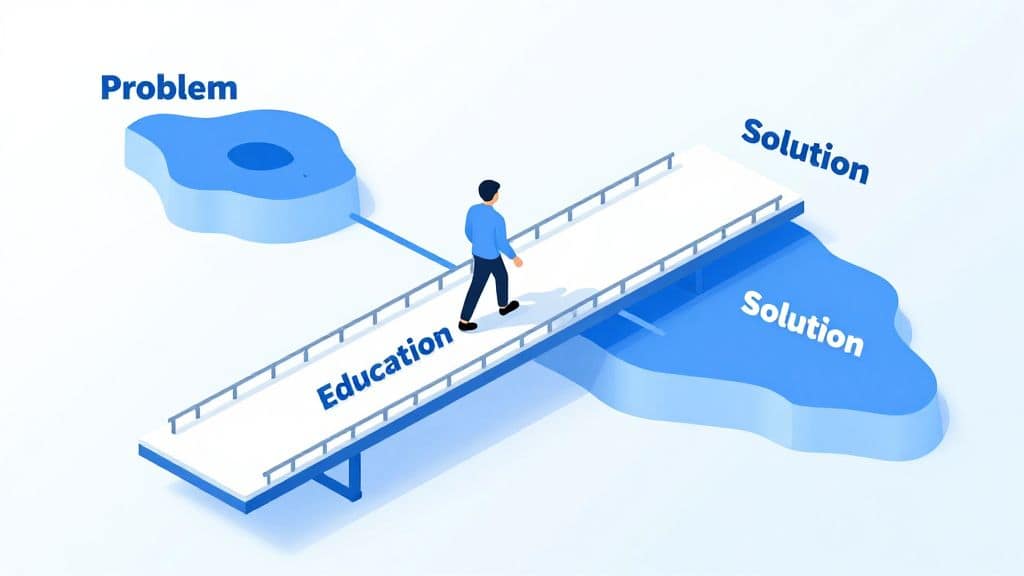
By giving away the “how,” you aren’t losing a customer. You are proving that you are the expert who can execute the “how” better than anyone else.
How to Build a Content Engine That Actually Converts
If you want to move away from the hard sell, you need to change your approach to content creation. It isn’t about bragging; it’s about teaching. Here is how you structure educational content that drives revenue.
1. Identify the Real Pain Points
Stop talking about your features. Nobody cares that your software has a “patented algorithm” if they don’t understand how it saves them time. Instead, look at the questions your customers ask every day. What keeps them up at night? What is the one thing they are struggling to figure out? Start there.
2. Provide a “Quick Win”
Your content should help the reader achieve something immediately. If you are a fitness coach, don’t just say “exercise is good.” Give them a 5-minute mobility routine they can do at their desk. If you are a financial advisor, give them a simple spreadsheet to track their daily spending. When a reader gets a result from your free content, they will wonder what kind of results they could get if they actually paid you.
3. Show, Don’t Just Tell
Use case studies and real-world examples. Instead of saying “our service is efficient,” show a step-by-step breakdown of how you helped a specific client solve a specific problem. Transparency builds a bridge of trust that a flashy brochure never could.
4. Bridge the Gap to the Sale
Education without a path forward is just a hobby. At the end of your helpful guide or video, you must tell the reader what to do next. This isn’t a hard sell; it’s a logical progression. “Now that you understand how to audit your own website, here is how we can help you fix the technical errors we found.”
The Shift from Salesperson to Guide
When you stop trying to close every person you meet, something strange happens: you start closing more people.
People are tired of being hunted. They want to be guided. When you position yourself as a teacher and a resource, you remove the friction from the sales process. You aren’t a stranger trying to take their money; you are a trusted advisor helping them reach a goal.
This approach requires patience. It takes longer to write an in-depth guide than it does to run a “limited time offer” ad. But the results are more sustainable. Educational content lives forever. A blog post you write today can continue to educate and convert customers two years from now. A sales pitch, on the other hand, dies the moment you stop talking.
Your Next Step
Take a look at your current marketing materials. If you removed your company name and the “Buy Now” buttons, would the reader still find value in what you’ve written? If the answer is no, it’s time to pivot.
Start by listing the top five questions your customers ask during sales calls. Turn each of those questions into a detailed, helpful article or video. Stop selling, start teaching, and watch your conversion rates follow suit.
Ready to transform your brand into a trusted authority? Let’s discuss how we can build an educational content strategy that works for your business. Contact us today for a professional content audit.